Canada has become one of the world’s most preferred destinations for international education, offering excellent academic standards, a safe environment, multicultural communities, and globally recognized qualifications. Every year, thousands of parents choose Canada for their children’s education because of its quality schools and promising future opportunities.
However, when a student is under the legal age of adulthood, the Canadian immigration process involves additional requirements that parents must understand. One of the most important of these is custodianship.
Many study permit applications involving minor children are delayed or refused because parents misunderstand custodianship requirements, fail to submit the correct documents, or do not adequately demonstrate that their child will be properly cared for in Canada.
This guide explains everything you need to know about Minor Students & Custodianship in Canada, including eligibility, study permit requirements, custodianship rules, required documentation, common mistakes, and how professional immigration guidance can improve your chances of success.
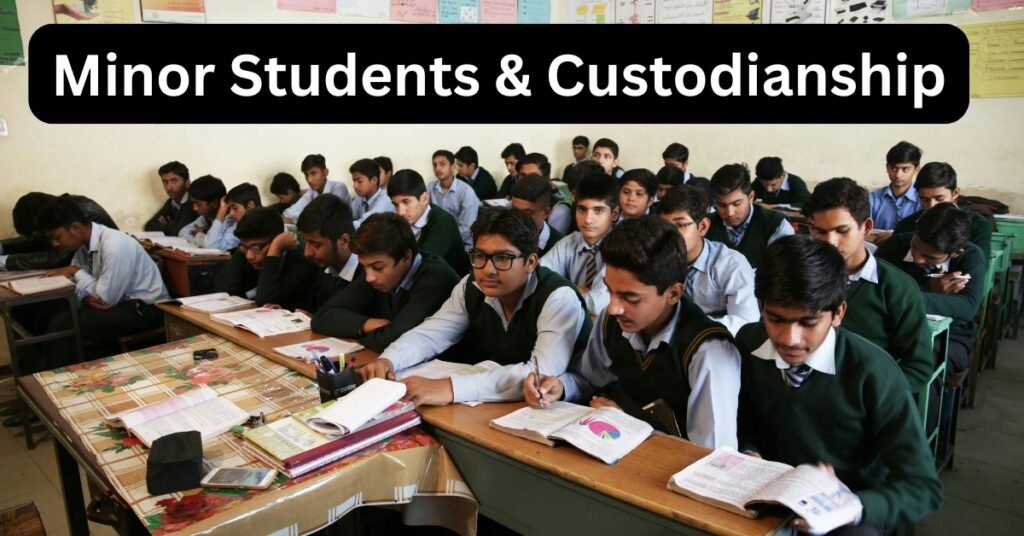
Who is Considered a Minor Student in Canada?
A minor is someone who has not yet reached the age of majority in the Canadian province or territory where they will live.
The age of majority differs across Canada.
Age of Majority by Province
18 Years Old
- Alberta
- Manitoba
- Ontario
- Prince Edward Island
- Quebec
- Saskatchewan
19 Years Old
- British Columbia
- New Brunswick
- Newfoundland and Labrador
- Northwest Territories
- Nova Scotia
- Nunavut
- Yukon
This means that a 17-year-old student studying in Ontario is considered a minor, while an 18-year-old studying in British Columbia may still be considered a minor because the age of majority there is 19.
What is Custodianship?
Custodianship is a legal arrangement that ensures a responsible adult in Canada will care for an international minor student while they study in Canada.
Since parents are often unable to accompany their children throughout their studies, Canadian immigration authorities require assurance that someone in Canada can provide supervision and support.
A custodian is not the student’s parent, but rather a trusted adult who agrees to take responsibility for the student’s welfare while they remain in Canada.
Who Can Be a Custodian?
A custodian must generally:
- Be a Canadian citizen or permanent resident
- Be at least 19 years old
- Reside in Canada
- Be capable of providing proper care and support
- Agree to act in the student’s best interests during their stay
The custodian may be:
- A family member
- A close family friend
- A relative
- A trusted individual recommended by the student’s school
- A professional custodianship service
The custodian does not become the student’s legal parent but assumes responsibility for the student’s daily care if necessary.
When is Custodianship Required?
Generally, international students under 17 years old who are not accompanied by a parent or legal guardian must have a custodian in Canada.
For students who are 17 years old or older but still minors, custodianship is often optional, but an immigration officer may require it depending on the circumstances of the application.
Factors considered include:
- Student’s age
- Province of study
- Living arrangements
- Maturity
- School type
- Overall safety and welfare
Can Parents Accompany Their Minor Child?
Yes.
If a parent accompanies the child to Canada and can properly care for them, a separate custodian may not be required.
Many families choose this option, especially for younger children enrolled in elementary or secondary schools.
Parents typically enter Canada using:
- Visitor Visa
- Temporary Resident Visa (TRV)
- Electronic Travel Authorization (eTA), where applicable
Do Minor Students Need a Study Permit?
In many situations, yes.
Most international minor students studying in Canada for more than six months require a study permit before entering Canada.
Some minor children already in Canada with parents who hold valid work or study permits may study at the preschool, primary, or secondary level without first obtaining a study permit, but obtaining one is generally recommended because it offers benefits such as easier continuation of studies and access to certain services.
Benefits of Having a Study Permit for Minor Students
A study permit can provide several advantages, including:
- Legal authorization to study
- Easier transition after reaching the age of majority
- Eligibility for certain school programs, such as co-op placements where permitted
- Access to some provincial services
- Clear immigration status throughout the student’s education
Custodianship Declaration Form
One of the most important documents is the Custodianship Declaration (IMM 5646).
This declaration has two parts:
Part One
Completed and notarized by the custodian in Canada.
Part Two
Completed and notarized by the parents or legal guardians in the student’s home country.
Both sections are generally required when custodianship applies and are submitted with the study permit application.
Documents Required for Minor Students
A study permit application for a minor may include:
- Valid passport
- Letter of Acceptance from a Canadian educational institution (where required)
- Custodianship Declaration (if applicable)
- Birth certificate
- Proof of relationship
- Parents’ consent letter
- Proof of financial support
- Passport-sized photographs
- Immigration application forms
- Medical examination (if required)
- Biometrics (if required)
- Additional documents requested by IRCC
Students travelling with only one parent may also need evidence of the other parent’s consent or custody documentation, depending on the circumstances.
Financial Requirements
Parents must demonstrate that they can financially support the student throughout their stay.
Evidence may include:
- Bank statements
- Education savings
- Fixed deposits
- Sponsor’s financial documents
- Employment letters
- Income tax records
- Tuition payment receipts
- Guaranteed Investment Certificate (where applicable)
Immigration officers want to ensure the student will have adequate funds for tuition, accommodation, living expenses, and return transportation.
Accommodation Options for Minor Students
Parents generally choose one of the following:
Homestay : The student lives with a Canadian family.
Boarding School : Many private schools provide supervised accommodation.
Living with Relatives : A relative in Canada may host the student.
Parent Accompanying the Child : The parent lives with the student during their studies.
Guardian Accommodation : Some schools coordinate approved guardianship and accommodation programs.
Responsibilities of the Custodian
A custodian may:
- Ensure the student’s well-being
- Be available during emergencies
- Communicate with parents
- Support the student when needed
- Help coordinate medical care if necessary
- Maintain contact with the educational institution
The exact day-to-day responsibilities depend on the family’s arrangements, but the purpose is to ensure the student has appropriate care and support while in Canada.
Common Reasons Minor Student Applications Are Refused
Some frequent issues include:
- Missing custodianship documents
- Incomplete application forms
- Insufficient financial evidence
- Weak study plan
- Unclear accommodation arrangements
- Missing parental consent
- Inconsistent documentation
- Failure to satisfy the officer that proper care arrangements exist
Carefully preparing a complete and well-documented application can significantly reduce these risks.
Tips for a Successful Minor Student Application
To improve your chances:
- Start the application early.
- Choose a recognized Canadian educational institution.
- Prepare complete financial documentation.
- Arrange custodianship before applying, if required.
- Ensure all forms are properly completed and notarized.
- Submit clear parental consent documents.
- Double-check every supporting document before submission.
- Respond promptly to any additional requests from immigration authorities.
Frequently Asked Questions (FAQs)
Can a 16-year-old study in Canada?
Yes. However, if the student is not accompanied by a parent or legal guardian, custodianship is generally required.
Is custodianship mandatory for a 17-year-old?
Not always. For minors aged 17 or older, a custodian may be optional, but an immigration officer can require one based on the circumstances.
Can grandparents become custodians?
Yes, provided they meet the eligibility requirements, including Canadian citizenship or permanent residence and residency in Canada.
Can parents visit their child?
Yes. Parents may visit Canada using the appropriate visitor authorization if they meet entry requirements.
What happens when the student becomes an adult?
Once the student reaches the age of majority in their province or territory, custodianship is generally no longer required. If the student continues studying, they must maintain valid immigration status and obtain or extend a study permit where required.
Final Thoughts
Canada offers outstanding educational opportunities for international students, including minors. However, because children require additional protection, Canadian immigration authorities place great importance on demonstrating that they will receive proper care and support throughout their stay.
Understanding custodianship requirements, preparing accurate documentation, and submitting a complete study permit application can make the difference between approval and unnecessary delays or refusals.
Whether your child is attending elementary school, secondary school, or beginning a pathway toward higher education in Canada, careful planning and compliance with immigration requirements are essential.
How Myroaming World Immigration and Citizenship Consulting Can Help
Applying for a Canadian study permit for a minor student involves more than completing forms. Parents must understand custodianship rules, prepare detailed supporting documents, demonstrate sufficient financial capacity, and ensure every aspect of the application meets Immigration, Refugees and Citizenship Canada (IRCC) requirements.
At Myroaming World Immigration and Citizenship Consulting, we are committed to making this process as smooth and stress-free as possible. Our experienced team provides personalized guidance tailored to each family’s circumstances.
Our services include:
- Assessing your child’s eligibility for a Canadian study permit
- Providing guidance on custodianship requirements and documentation
- Assisting with study permit application preparation
- Reviewing supporting documents for accuracy and completeness
- Helping prepare financial documentation
- Supporting applications for accompanying parents where applicable
- Assisting with study permit extensions and future immigration pathways
- Offering professional guidance throughout every stage of the process
We understand that your child’s education and future are among your family’s most important priorities. Our goal is to help you submit a strong, well-prepared application that maximizes the chances of a successful outcome.
If you are planning to send your child to Canada for school, Myroaming World Immigration and Citizenship Consulting is ready to guide you every step of the way with trusted, professional, and client-focused immigration support.